How It Works
A simple three-step service-request process.
How the request process works
Start by sharing the water problem, property location, and contact details. The information helps identify the type of service that may be needed and the urgency of the situation.
Describe the problem
Choose the water issue and when it happened.
Add the property location
Provide the ZIP code and state.
Share contact details
Provide the best phone number and email.
Receive the next step
Your request can be reviewed for available service options.
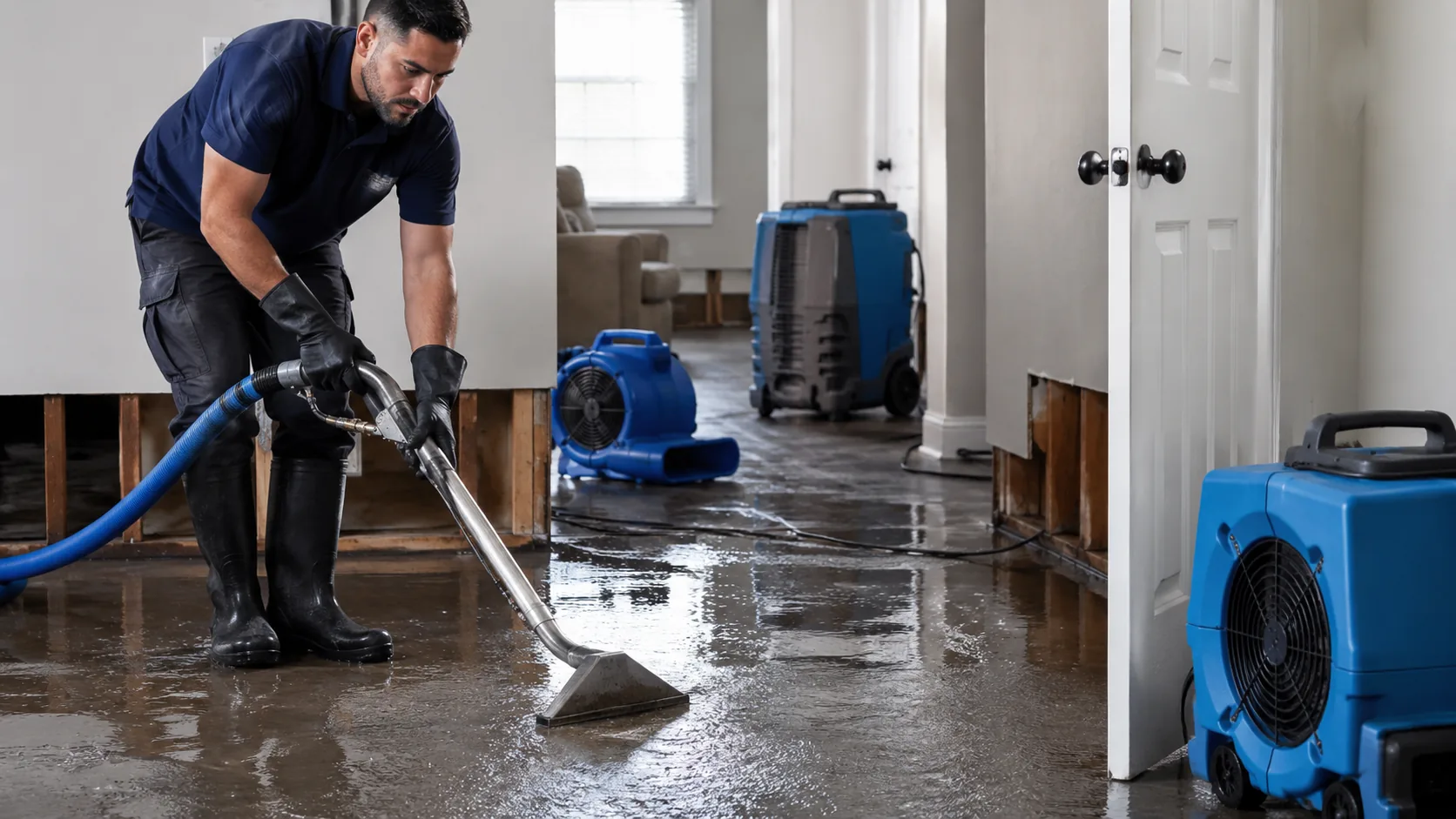
What information is helpful?
You do not need to diagnose the entire problem. Basic details are usually enough to explain what is happening.
- Type of water problem
- When the damage started
- ZIP code and state
- Whether water is still entering the property
- Best callback number
When to call instead of waiting
Consider calling when water is actively spreading, sewage is involved, a ceiling is sagging, electrical fixtures are affected, or the property is becoming difficult to use safely.
What may happen after the initial request?
Depending on the situation and available coverage, the next step may include follow-up questions about the source, affected rooms, access to the property, or the urgency of extraction and drying.
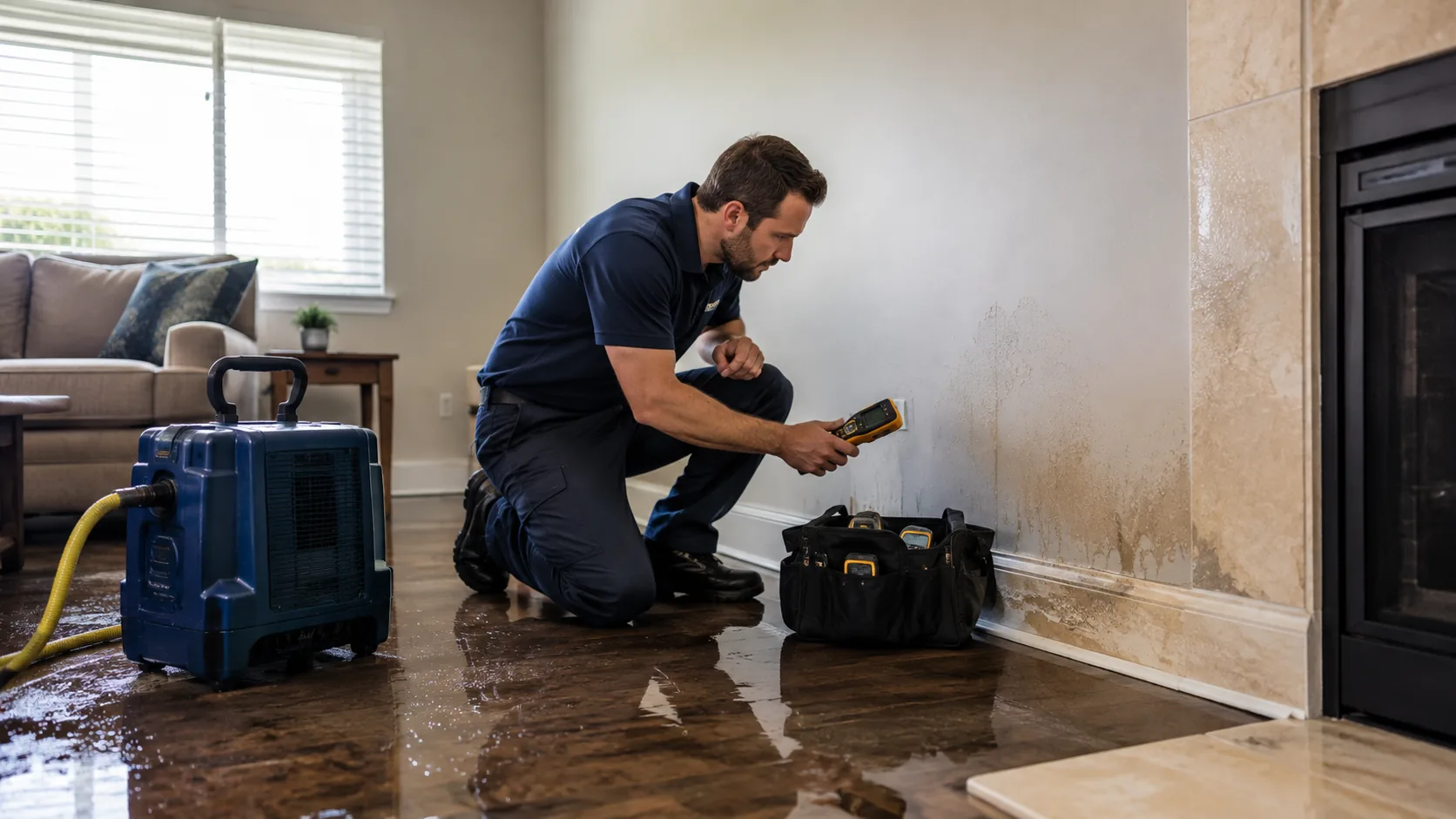
Prepare the property information
If possible, have the property ZIP code, the likely source of water, the rooms affected, and the approximate time the problem started. Photos can also be useful for your own records and insurance documentation.
Request Process FAQ
What should I do first after finding water damage?
If it is safe, stop or reduce the water source, keep people away from electrical hazards or contaminated water, move easy-to-lift valuables, and document visible damage.
When is water damage an emergency?
Active flooding, burst pipes, sewage backups, ceiling leaks near electrical fixtures, rapidly spreading water, or water affecting essential living areas may require urgent attention.
Can water be hidden behind walls or under floors?
Yes. Moisture can travel beneath flooring, behind baseboards, into drywall cavities, insulation, cabinets, and other materials even after visible water is removed.
Can wet materials always be saved?
Not always. Whether a material can be dried and retained depends on the material, contamination, how long it remained wet, and the amount of physical damage.
Will homeowners insurance cover water damage?
Coverage depends on the cause of the loss, policy terms, exclusions, deductibles, and whether the event is considered sudden, accidental, flood-related, or maintenance-related.
How is water damage repair cost determined?
Cost can depend on the amount and type of water, affected square footage, materials involved, drying requirements, demolition, cleaning, and any reconstruction that follows.
Should I take photos before cleanup starts?
When it is safe, photos and videos can help document the condition of affected rooms, belongings, and materials before they are moved or removed.
How can I request water damage help?
Use the request form on this page or call the phone number shown on the website and provide the location, type of water problem, and best contact information.
Start Your Request
Share the main water damage details and property location.